Showing posts with label All Personal Activites and Photos are from The Growth of a Teacher-Noted Otherwise.. Show all posts

Friday, November 9, 2012

Farm Unit: Part 1


Yee*Haw
Fun Farm Unit

 
Through all of the exploration, field trips, activities, books, games, lessons, planning, and more this entire process was not only lengthy it was educational for both the teacher and  student.  That said, this unit worked out slowly due to the process of acquiring knowledge about farms, farm life, who worked on the farms and some of the machines that help on farms.  With all that- the main focus was the animals and agriculture.  Overall - everything was for the purpose of the realization regarding the process of growth and understanding. 

Common Core:  Kindergarten Science
Life Science:  Structures and Functions of Living Organisms.
K.1.1.1 and K.1.1.2 - Compare Characteristics of animals that make them alike and different from other animals and nonliving things. 

--  Animals, living situations, and food will be compared and contrasted in terms of structure, growth, changes, movement and basic necessities.  That was accomplished through discussions, completed projects, open-ended questions, field trips, and the list goes on.  Enjoy!!!  


Lesson 1:  What is a Farm
Taking a little one regardless of age to a zoo or petting area would make a great impact on them.  The zoo aspect would assist within future lessons and I believe would help with memory recall.  Meaning, if you read a book you can always ask afterwards, "remember when..."  Usually, at least for my son, he becomes very excited and recalls when, what, and where we saw the visuals ~ specifically! the animals.  Personally this was my absolute favorite part because it demonstrated what my little one understood throughout the various academic process, visuals, and overall thematic unit. 

 Read~ Calliou: A Day at the Farm
 By:  Chouette
 
This is a simple cute and age appropriate book for small little readers.  The storyline shows the one opening the book   
about going to a farm, visiting with the animals, and learning about some of the daily functions that help with the day-to-day life.  

After reading the book you will have a great opportunity in order to discuss the following:
  • Animals
    • What they looked like
    • The names
    • The sounds they made
    • What they ate
    • Where they slept
  • The Farm
    • The animals who live on the farm
    • The people who take care of the animals
    • What the animals eat
  • Be creative - allow the child to answer.  I often respond back to my son by asking, "What do you think?" I found that this allows him to use his prior knowledge and own personal thinking in order to come up with his own answer without having my input.
    Craft:  Making a Barn
    As with every lesson implementing and using various recycled material is useful and very helpful.  Why buy expensive items when one could use everyday household materials?! In addition -this project will require adult assistance.

    Items Needed:
    • Two Empty cardboard boxes (pref. recycled - one medium and small sized)
    • Red and White washable paint
    • Two medium sized paintbrushes
    • Child sized painting smock
    • Knife (Adult only)
    'The Barn' was an absolute fun and surprisingly not very messy project.  The overall time frame took two days from start to finish.  My son had this project in his room for over two months playing with it.  He truly enjoyed the barn!!!!  *One reason to just give little ones cardboard boxes ~ let them become creative through the use of their imagination...that's for another post. 

    Directions
    1. Set up the painting area and put a smock on the little one.
    2. Prepare the box- outline the windows and barn doors.

    3.  Paint the white portion.  (If done after the red... the white might turn pink)

    4.  Now for the red.
     
    5.  *Adult Only* Cut out the barn door and windows.
    6.  Do the process all over for the top portion of the barn.
    7.  Finally, Enjoy!!

    Read~ Barn Dance
    By: Bill Martin, Jr. and John Archambault

    This is a creative little book that ponders the young minds through the entire sense of the imagination world.  I absolutely enjoyed the storyline and systematic flow in regards towards the characters.  My son wanted me to read this book over and over again.  Personally, I think it was because the main character was about a little boy.   


    Lesson 2:  Who works and lives on a Farm

    Lesson two was basically discussion time.  The process would be to ask open-ended questions for the purpose of gathering insight as to what the child already knows, figured out, and concluded.  Afterwards, you would fill in the blanks.  Finally, depending on the age of the little one the discussions would be as brief and/or as long as you see fit. 

    Read:  The Farmer in the Dell
    Pictures by:  Mari Maki Rai

    The old fashioned type pictures do the song justice.  Colorful and fun.
    Sing:  The Farmer in the Dell.  If and when possible use visuals!!
    Incorporating singing and movements within the various lessons have the ability in order to improve memory, gross motor skills, and process of thought. 

    Imaginative Play:  Have Fun and Dress Up!!

    "I'm a Farmer!", "I'm a Cowboy!", "I'm a __________."  Have the child fill in the blank... have fun... allow the little one to explore their creativity!!

    Imaginative time or what I like to call,  'Dramatic Play' allows little minds to explore, expand, and feel their personal way through various emotions, lessons, and more.  As a teacher, this process is very important.  As it allows one in order to really figure out things or make something up.  I absolutely love watching growth expand within young ones.  Children have such creativity, insight, and more.  Allow all of that to flourish. 

    I know that some think that this 'is not' considered to be an educational tactic- I beg to differ.  If one takes way the process regarding the 'explorative' nature of a child they would in essence taking away the very soul of what a child does best ~
    play!

    Read:  The Farm
    By:  Charles Reasoner

    This hard bound book has vibrant colors and animal tabs that would guide young readers.  This is an educational short book that gives young readers brief information about a few animals that live on the farm.

    Lesson 3:  Learning about Crops 

    This part of the unit one will learn about what kinds of food grows and is harvested on various crop farms.  Evaluating and exploring the process of planting, growth, and then, eventually eating the foods is a great learning experience for all. 
    (Note:  Previous Unit:  Harvest Apples discusses more on this particular topic) 
    Enjoying some fresh Veggies!
    This within itself can be future unit regarding
    Healthy Eating.
    Getting the Corn ready for Dinner.


    Lesson 4:  Animals that Live on the Farm
    Yay!! We loved this part!

    Horses:

    Horses in general are such majestic and beautiful animals.  The eyes of such creatures feel as though they are piercing through ones soul ~ at least that is how I felt when my son and I were standing next to Cassie (pictured below).  A truly humbling experience. 
    Read:  Foul to Horse
    By:  Discovery Kids

    This interesting and educational book has vibrant visuals that would appeal to most readers. 

    Field Trip:  Learning more about Horses.

    Again, this part of the entire unit was the most fun!  We absolutely LOVE Cassie!! She was incredibly gentle and spirited.  She was one beautiful animal that wanted a lot of attention and she certainly got it from us.  My son enjoyed himself throughout... petting her, feeding her, picking up her horse 'pucky', walking her, talking to her, and yes, loving her. 


    Meet Cassie the Horse.
    She is an absolute beautiful animal that was incredibly friendly!

    Giving Cassie a Snack with Betsy the Dog.
      
    Watching Cassie drink some water.
    Learning to feed Cassie some hay.  My son enjoyed this.  He was up ~ bright and early every morning in order to feed this very hungry animal.  She loved the attention that we gave her.  What joy!!  
    
    This was such a blessing.  Taking a wonderful animal for a walk.  Personally, I think she enjoyed it more than us! Just for the simple fact she was allowed out of her corral. 
     Craft:  Making a Horse
    • Free Hand Draw a Horse on some scrap cardboard
    • Paint the Horse and allow to dry
    • Cut an 'L' shape piece of cardboard and glue the smaller portion on the back.
    Materials:
    - Cardboard
    - Brown washable paint
    - Paint brush
    - water
    - Scissors
    - Tape


    Art:  Water Color Horse
    Free Paint, Let Dry, and glue wiggly eyes.
    Materials:
    -  White construction paper
    -  Black marker
    -  Watercolors
    -  Paint brushes
    -  Water
    -  Wiggly Eyes
    -  Glue


    Cows:

    Field Trip:  Museum

    Yes, a slight odd choice in order to learn about cows.  Well, in between road trips and observing cows throughout a few states graze pasture lands ... the museum had a bit more educational aspects towards what 'dairy cows' do and actually, offer people.  Knowing that, my son was able to look at a short video clip at the museum, listen to a brief documentary (mainly look at a few pictures...it was geared towards older children), and walk around while asking a lot of questions about the large plastic dairy cow. 

     Craft:  Cow
    -  Recycled cardboard
    -  White  and beige paint
    -  Black marker
    -  Tape
    -  Glue

    Directions:
    - Draw a template of the cow.
    - Paint the cow and set to dry.
    - Color in the black spots of the cow.
    - Cut the cow. (adult)
    - Tape the 'L' shape cardboard on the back of the cow. This way it will stand up on its own.
     

    Read:  Moo, Moo Brown Cow, Have You Any Milk?


    By: Phyllis Gershator
     
    A fun little colorful book for little ones! (Not one that exactly explores the farm life.  However, one that is a cute read.) 
     
     
    Pigs
    Field Trip:  Enjoy a Petting Zoo
     
    This was a lot of fun.  My husband and I absolutely enjoyed watching our son run around with the animals.  His attitude towards the animals was such a delight in that he loved playing with them, running around, and trying to play with them.  Afterwards we talked about the colors on the pig, the noises he heard, and where pigs live. 
     Craft: Making a Pig
    
    Materials:
    - Recycled Cardboard
    - Pink or Beige Washable Paint
    
    - Tape
    - Black Ink
    - Scissors
    - Painting Smock


    Directions:
    • Just like the horse and cow - draw a pig on the cardboard.
    • Paint it- set to dry
    • Cut out (adult only)
    • Make an 'L' shape again - tape on the back.

    Read:  Old MacDonald had a Farm


    This is a cute edition of the popular story.  The felt tabs attract the little ones very easily.  Fun!


    Why spend a lot of many of expensive toys?!  Personally, I don't understand that concept!! Make your own fun items to play with. The imagination that comes from a child is something special that every adult should cherish.

    Read:  My Big Armarillo
    By: Satomi Ichikawa

    This story is unlike any within this unit ~ it discusses life and passing.  A simple story on paper however, one that truly touches the heart strings of young and old(er) readers.  Of-course, it would probably take a bit more discussion afterwards considering the storyline falls along the topic regarding loss.  That said- the ultimate focus was about the spirit towards maintaining love for an animal. 

    Surprisingly, my son enjoyed this story.  He wanted me to read it over and over again.  Oh, the discussion we had.

    Glue the barn
    Color the Pigs
    Color 'Armadillo' yellow
    Color the sky
    Cut out the white pads- shape them like clouds or
    just glue on the cotton balls.
     

    Art:  Pigs and Barn

    Materials:

    - White Construction Paper
    - Crayons
    - Barn cut-out
    - Pig templates or you can make your own
    - Glue
    - White cotton balls or cotton thin face pads
    - Scissors


    Craft:  Paper Mache Pig
    Materials:
    - Balloon
    - Pink washable paint
    - Pink construction paper ( cut into a triangular  shape )
    - Black marker
    - Tape
    - Glue
    - Water
    - Lots of Newspaper
    - Recycled Yogurt cups (5)
    - and a Place that is safe to get messy... or, in this case, wet! Very wet ;)
                       Blow Up the Balloon
                       Tape Four Recycled Yogurt Cups on Bottom
                       Tape one short yogurt cup on the side of the Balloon.


    Ready to get MESSY!!!! I hope so!!
    Yes, I helped my son with this. 

    Mix the water and glue together in the pan.
    Dip the newspaper lightly into the pan.
    Hold the newspaper up and swipe the excess water off into the pan.
    Lay the newspaper over the balloon in different directions on top of each each. 
    Put several layers of newspaper all over.
    Set the project aside and allow to completely dry.


    Day 2:  Time to Paint.
    Paint and set to dry.


    Day 3:  Make the ears.
                 Cut the pink construction paper
    into triangular shapes.
       (More rounded at the top)
        Glue to the top of the pig. Glue wiggly eyes.
    Color two ovals on the nose
    If you want a mouth ~ go for it.

    Have fun and Enjoy!!!


    Monday, March 12, 2012

    ~ Bears

    {Bears}
    This unit was originally designed to discuss and learn more about 'Polar Bears'. However, after several stories and activities, I noticed that my little one was becoming more and more excited about what we were doing...  with that,  I happily decided to expand the theme further towards different bear species.

    **  There are Eight different types of Bears: Brown Bear also known as Grizzly Bear or the Bear with Many Names, Black Bear, Sloth Bear, Sun Bear, Panda Bear, Polar Bear, Asiatic Black Bear, and Spectacled Bear.  During my research and preparation I came across a helpful and informative website called the "Great Bear Foundation.
    This foundation researches the variety of bears while trying to make it known to the public that the bears need funding for support and safety from extinction. The website pinpoints strong research regarding the topic. 

    Below you will noticed that I implemented Science, Mathematics, Music mixed within the Creative play, Art, and LOTS of Literature along with a few brief video clips.  I find using different delivery methods make information within the lessons fun for the children.    
    Fun Fictional Books
    With that, I highly encourage having creative discussions with regards to the lessons below.  You can do this before and/or after the projects, reading the books, and lessons.  By doing so would allow the child to express their personal thoughts about the topic and/or what they have learned.  This is one tool that I often practice  ~ It helps gather prior knowledge through the process of what needs further development and/or modifications.  Personally, I like to know what the child remembered throughout.  It is truly amazing just how much children are able to recall.   

    Possible discussion ideas:
    * The similiarities and differences between each type of bear...
    * Description of what each bear looks like...
    * How and where each type of bear lives...
    * The eating habits of the bears...
    * 'Compare and Contrast' each type of bear...
    * Which one was the favorite bear...
    * The discussions are endless!
    **Hope that you have fun!!
    Enjoy!!
    Introduction
    This is the time to briefly go over the different types of bears and 'touch and feel' any stuffed ones that you might have lying around. {Again} This will help you gather any knowledge about what your little one may know about the subject and/or animals. 
    HAVE Fun and Read, Read, Read!!!

    I have included various books ~ Hopefully, they will encourage both parents and young ones alike towards the passion for reading, learning, and exploration.

    Read: "A Bear for You" By: Kirsten Hall and Ilustrated by Iole Rosa
    This is a fun little book. It is great for those who are learning to read and/or those developing stronger reading skills. Perfect for Pre-K and Kindergarteners. This simple introductory book briefly discusses several different types of bears. It has soft illustrations that attract various age groups.

    Lesson 1: 'Polar Bears'


    Read: "Polar Bears" By: Norbert Rosing~
    This is an interesting book with real life photographs. The photos within truly seek out the attention of readers both young and old[er]. It is not only attractive ~ it is incredibly informative, detail oriented, and heartfelt with regards to all of the loving animals included within the story. It will, however, need to be modified according to age. My son absolutely loved looking at the pictures. Once finished, he talked and asked a LOT of questions about the different things within the book, such as: 'What are the bears doing?', 'What is that animal?', 'What are they sleeping in?' and lots more.

    Obviously, we don't live in this wonderful white world so, I have included a short clip in order to demonstrate a brief glimpse.

    A Beautiful Little Video of a Mother with her Cubs!!
    The Scenery within the video is Absolutely Breathtaking.
    My son, was in Awww!
    Watching will give a slight insight to a world beyond...
    ~ Talk about Den, the Mother, and yes, the cubs!

    Activity 1: Polar Bear Ice Dens
    ~ Discuss where Polar Bears Live
    ~ Discuss the location and the glaciers
    ~ Discuss the weather and why polar bears need dens.
    ~ Reference back to the video clip.
    ~ This activity is great for sensory.
    ~ Use the necessary vocabular words such as: 'dens', 'cold', 'freezing', etc.
    Materials:
    Ice Cubes, Salt, A Bowl, and A small container.
    Directions:
    1. Use different shape ice cubes
    2. Put the ice cubes one at a time on the plate.
    3. Pour a liberal amount of salt all over the ice.
    4. Stack the ice slowly on the plate. They will stick- it does take time.
    Activity 2: Sugar Den
    Materials:
    • 1 box of sugar cubes
    • 1 tacky glue bottle
    • 1 paper plate
    Directions:
    1. Start stacking the sugar cubes in an arch shape on the plate... (glue one on top of each other.)
    2. Cover part of the arch with more cubes.
    ~ Easy project.
    ~ Great for tactile and use of fine motor skills.
    ~ Connections will soon be made "freezing" and/or "cold" ... "feels like this" or "this is what cold water (or) freezing water feels like"

    *READ!
    The Author and Illustrator, Hans de Beer wrote several creative and fun 'Little Polar Bear' books. The characters, specifically, the 'Little Polor Bear' within the books expanded further within growth throughout his personal experiences. With that, he developed most of the time a stronger self-esteem, established friendships, and overcame different challenges.


    ~ I highly recommend ~
    • Little Polar Bear
    • Little Polar Bear Finds a Friend
    • Little Polar Bear and the Reindeer
    • Little Polar Bear and the Husky Pup
    • Little Polar Bear Take Me Home!
    • Little Polar Bear and the Brave Little Hare

    ~ After reading be sure to discuss the different animals, locations, and various situations regarding the animals: Where the animals Lived, How they lived, Where and How they slept, What they ate, How they were able to get food, etc.
    Activity 3: Ice Glaciers
    Materials:
    • Water
    • Plastic Bowls or cups (various sizes)
    • One large class bowl.
    • Small plastic polar bears or white strofoam bear cut-outs
    *We Recycled the bears from a cup~ it worked.
    Directions:
    1. Pour cold water into the plastic containers.
    2. Put the bears in the water.
    3. Put the containers in the freezer overnight.
    4. Discuss the process then, read one of the polar bear books mentioned above.
    5. Next day, pour warm water over the frozen containers...then, put the formed ice (glaciers) in a large bowl of cold water.
    *My little one had a fun time with this. He was constantly putting his hands in the cold water, touching the bears, and talking about the ice (glaciers), all while going back and forth... far as to what he remembered from the stories, lessons, and video clip .
    ** Be sure to use vocabulary words: "Glaciers", "Ice", "Cold", "freezing", etc.
    In addition, after playing with the "glaciers" myself.... I read another book while he did both... played and listened.
      Activity 4: Cotton Ball Polar Bears
      Materials:
    • White Bear Template
    • 20-25 White cotton balls
    • Glue stick
    • Black pen
    • 2 Wiggly eyes

    Directions:
    1. Glue the cotton balls onto the bear.
    2. Glue the wiggle eyes towards the top.
    3. Draw a nose and mouth
    4. Once finished, review and read another book.
    *Great for those who have tactile issues....with pulling the cotton apart, picking the cotton ball up one at a time, placing the glue on the paper, etc.
      Activity 5:  "Monart" Polar Bear
      I admit, I lack knowledge within the art world.  I used to call this type of activity "Watch and Draw." My wonderful friend enlightened me regarding the "Monart" concept and theory behind art.  Monart allows children to deeply observe, appreciate, and attempt to independently draw by and for themselves.(Note, draw by themselves)  Therefore, I highly recommend teachers, parents, and children to view and research the Monart School of Arts website.  It is vibrant, creative, and truly educational and geared for those who are interested in the topic.http://monart.com/about/method/

      Explore an Open Mind on Paper!!
      Materials:

      - White crayon
      - Color choice of construction paper. 
      My three-year-old did this all by himself.
      Directions:

      1.  Visually demonstrate in front of the student.
      2.  One simple step at a time.... meaning use short phrases.
      3.  Take your time and observe the child draw.
      4.  Do not correct any mistakes!! (i.e. if the child draws a 'long line' instead of a 'short line' don't worry)Allow the child to freely draw!! Reason- you want to establish creativity... being overly stressful on profection will not allow that to happen.  
        Lesson 2: Panda Bears
        I recommend reading this very cute little story by Matthew Baek ~'Polar Bear and Panda." The author delivered a creative story that gave insight in regards to differences between two 'culturally' different bears. What made this fictional based book an interesting read... is the fact, you can possibly relate the story towards actual people and other various cultural groups. *I find that to be a great discussion for the older students*
        Stock ImageWith that, another book ~ 'New Neighbors' maintained a similar situation. Stan and Jan Berenstain, I believe did a great job designing the story with regards towards understanding differences while at the same time realizing that 'We' share a lot of similiaries and interests. Both books are worth the read as they help children open their eyes towards accpetance.
        Activity 1: Paper Plate Panda
        Material:
      • Two Paper Plates
      • Black Water Color Paint
      • Paint Brush
      • Two large wiggly eyes
      • Tacky glue
      • Stapler
      • One Black Pipe Cleaner
      • Black construction paper
      Hot glue gun *optional
      Directions:

      Step 1: Cut 2 medium size black ovals.
      Step 2: Glue the black ovals on the paper plate (towards the top)
      Step 3: Glue the wiggly eyes on the black ovals.
      Step 4: Cut two 3 inch black ovals. (Ears)
      Step 5: Glue the ears on the back of the top portion of the plate.
      *The tacky glue worked better than regular white clue


      Step 7: Cut the pipe cleaner in half. With a half-twirl the pipe cleaner.
      Step 8: Either with the hot glue gun or tacky glue... glue the twirled pipe cleaner lower and between the eyes. (nose)
      Step 9: Cut the remaining pipe cleaner in half. Hot glue one of the pieces straight down from the nose and curve the other for the mouth.

      Step 10: Now, for the second paper plate. Make two black stripes.
      Step 11: Water-Color Black on the upper and lower end of the plate. Set to dry.
      Step 12: Once dry glue the head of the bear onto the body.
      Step 13: Cut two black medium size ovals for the arms and two small 'L' shapes for the legs.
      Step 14: Glue the arms and legs onto the body.
      * Depending on the paper plate you may have to staple the head and body together.
        Read: "Panda Bear, Panda, What do you see?" By: Eric Carle and Bill Martin, Jr.
        Another fun book from one my favorite illustrators ~ Eric Carle! Colorful story!!
        Activity 2: Panda Jar
        Materials:
      • One plastic jar (Recyle a jar...We used glass)
      • One large piece of both black and white tissue paper.
      • 1 pencil or paintbrush
      • 1 large piece of black construction paper
      • Tacky glue
      • Scissors
      • Two medium size wiggly eyes.
      • Black and Red Crayon
      • Tape
      Step 1: Scrunch up the black and white tissue paper.
      Step 2: Stuff the tissue down using the pencil or paintbrush.
      Step 4: Cover the lid with black tissue paper. Secure with tape underneith.

      Step 5: Cut
      -- One white Bear Head
      -- Four black ovals (eyes & ears)
      -- Another two black ovals (arms)
      -- Two 'L' shapes (legs)
      *Make a small slit on the bottom of each piece.
      *Tape if necessary.
      Step 6: Glue the wiggly eyes and draw the nose & mouth.
      **Enjoy!
      Activity 2:  Playdoh Panda
      Material: 
      -  Black and White Playdoh

      Directions: 
      Have fun rolling the playdoh together.

      "Busy Panda" by:  John Shindel
      Pictures by:  Lisa and Mike Husar

      This is a delightful and simple read.  The pictures are adorable!

      Read: 
       "Mama Mama" by:  Jean Marzollo
      Pictures by:  Laura Regan. 
      This book is a simple and attractive read.  Great for bedtime!!

      Lesson 3: Brown Bear
        Pick up a Book and Read Something
        Yay!! Another Eric Carle and Bill Martin Jr. book
        “Brown Bear, Brown Bear What do You see?”
        The large visuals attract children in many ways, especially the young readers. The 40th Anniversary Edition comes with the CD, which is read by Gwyneth Paltrow. I have recently added ‘Book Reports’ within my lesson plans for my son – he gathers a lot from listening to someone other than myself. **He enjoys listening to the books on CD.
        A fun activity to go along with this… My son and I acted out the animals within the story ~ fun time… and loving memories.  In addition, we changed the names of the bears we were acting out for example the Sun Bear ~ We would lay on the floor pretending we were laying out on a tree branch. 
        I found ‘Our Three Bears’ by: Ron Hirschi to be an outstanding book. The visuals within stood out in ways that you can’t help but stare. Read and Use this book as a resource for the following bears mentioned
        ~ Black Bear, Grizzly, and the Wonderful Polar Bear~
        Within you will gather information regarding:
        - Where and How they Live
        - Hibernation information and various other - Specific Bear Facts
      Activity 1: "Paper Plate Brown Bear"
      Materials:
      - 1 Paper Plate *Note- don't use styrofoam  - we did- doesn't work very well.
      - Brown Washable Paint
      - Newspaper
      - Smock or old t-shirt.
      - 2 large wiggly eyes
      - 2 medium size brown construction paper circles
      - 1 large black construction paper oval
      - sissors
      - glue bottle
      - water

      Directions:
      1. Set up the table (newspaper on the table, child in the smock or t-shirt, and paint out).
      2. Paint the paper plate brown. Set to dry.
      3. Glue the medium size circles on the opposite side of the plate 3 inches apart. (These are the ears).
      4. Glue the large black oval in the middle of the plate.
      5. Glue the two large wiggly eyes up above the black oval.
      6. With a dark brown or black- Start from the black oval- draw a short line straight down and then, a smile.
      7. Enjoy your Painted Bear. 
      Read:


      "Amazing Bears"
      AMAZING BEARS (Eyewitness Juniors)
         by: Theresa Greenaway Photographs By: Dave King.
      This is an outstanding book that visually illustrated the various bears throughout different the photographs. Again, the information would need to be modified.


      Bears


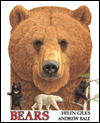
      2. “Bears" by: Helen Gilks and AndrewBale This 'Big' book has large visuals that would be interesting for a little one. My son, loved looking at the cover photo, especially at the eyes.
      The content would need to be modified depending on the age of the child.


      Actvity 2:  Pinecone Bears
      (One of my personal favorite througout the unit... who am I kidding?!? They all are...because I am doing them with my loving little man)
      Mr. & Mrs. Pinecone

      Materials:

      -  Small/Medium Size Pinecone
      -  Hot Glue Gun
      -  2 Medium Size Wiggly Eyes
      -  Red and Black pipe cleaners
      -  Small oval shape brown construction paper and rounded nose.
      Directions:
      1.  Place the pinecone in an upwards position. 
      2.  Turn on the hot glue gun. (adult only)
      2.  Set up the material:  Cut all of the pipe cleaners in 2-3 inches each.
      3.  Cut the brown construction paper in an oval.
      4.  Cut a small rounded brown construction paper for the nose.
      5.  Glue on face.  (Mainly the adult due to the glue) 
      6.  Little one can curl the pipe cleaner nose, glue on the ears, and the little part of the nose.
      :) My son placed them this way, "They are talking, Mommy"
      Activity 3:  Footprint Bear
      *Another Favorite


      Woooohoooo Very Very Cute!!!
       Materials:
      -  Brown Washable Paint
      -  Ribbon of choice
      -  2 Medium size Wiggly eyes
      -  Tacky Glue
      -  1 Black marker
      -  3 inch Ribbon

      Directions

      1.  Paint the childs foot or lightly step on the paint
      2.  Gently place the foot on the paper
      3.  Paint small arms and legs
      3.  Wash up
      4.  Once dry- Glue the wiggly eyes and red ribbon mouth
      5.  Draw the nose
      6.  Make a bow out of the ribbon- Glue on the bear.
      Activity 4:  Brown Salt Bear
      Materials:

      -  bear template or draw a bear
      -  1/4 cup of salt
      -  1 tablespoon of brown paint
      -  glue
      -  2 large wiggly eyes
      -  black marker
      -  glue stick
      -  black construction paper

      Directions:

      1.  Mix the salt and brown paint gently together
      2.  Glue the entire bear with the glue stick
      3.  Rub the salt mixture all over the bear.
      4.  Draw the black nose.
      5.  Once dry- cut out
      6.  Glue on the black construction paper
      7.  Glue the eyes on.


      This is a fun activity. 
      The salt gives the craft a fuzzy feel!
      This project is great for tactile exposure!!


      Activity 5:  Hibernation/Cave:  Paper Plate Story Bear
       
      This simple craft made a lot of sense to my little one.  He understood the definition and concept regarding ‘hibernation’ very well.   First, I read a story from one of the provided books and pointed to the bears that were hibernating…. Afterwards, we really focused on where the different bears hibernate (i.e. “Caves”, “Dens”, etc.)    
      Materials:

      -  Bear Template
      -  Glue Stick
      -  One Paper Plate

      Directions:

      1.  Color, Cut, and Glue the Bear Template on the plate
      2.  Write what you would like on the plate (i.e. Outside: "The bear is getting sleepy." Inside:  "The bear is sleepy in a cave."

      Activity 6:  Monart:  Brown Bear

      Materials:
      -  Brown Crayon
      -  Brown Construction Paper

      Directions:

      Follow the same concept as the one above.


      Lesson 4:  "Black Bear"

      Read:  "Black Bear" by Daniel J. Cox.
      Stunning Book that provides a outstanding visuals.

      Reviews:


      - Highly recommend
      - Appealing to both young and old(er)
      - Interesting photos


      Activity 1:  Black Felt Bear
       Materials:
      - Bear Template
      - Black marker
      - Tacky Glue
      - Black felt bear
      - Oval light brown shape
      - Triangle black felt (Small)
      - One (1 inch) thin black felt shape
      - Two small wiggly eyes.
      - 1 piece of brown construction paper
      - pieces of grass and twigs


      Directions:
      1.  Prepare ahead of time the project (the template and the felt pieces.
      2.  Glue the nose, mouth, eyes, bear, grass, and twigs on the construction paper.
      3.  Allow to Dry.

      *The same could be done for the Sloth Bear, Sun Bear, and/or the Spectactled Bear.
      -Just discuss the differences.
      Read: 
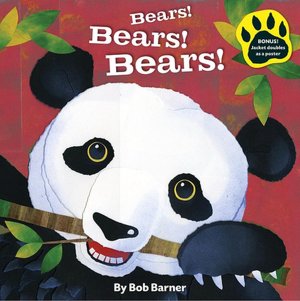
      Bears! Bears! Bears!
       “Bears! Bears! Bears!” by:Bob Barner. This book is colorful and informative for the young reader. It has short sentences that end with the use of rhyme.The last page, briefly describes each bear that corresponds with an appropriate photo. 

      Discussion: Talk about the Spectacted Bears while eating vegtables ( a popular diet amongst the beautiful animals).


      More fun Clips:

      *Compare and Contrast the video clips with the book *


      Lesson 5:  Math Lesson
      Activity 1:  Graphing with Bears

      Materials:
      - Graph Chart
      - Gummy Bears

      Directions:
      1.  Hand the child a few gummy bears.
      2.  Help the child graph.
      3.  Once finished ask about which one has "more", "less", and/or "the same." In addition, ask "What are we doing?"  "Graphing"

      * My son and I practiced this for a week straight. 
      * What was great we did this after dinner - the gummy bears were a 'sugar free desert'.

      Activity 2:  Gummy Bear Sort

      Materials:
      -  (4-5) small napkins
      -  An assorment of  gummy bears (pref. sugar free)

      Directions:
      1.  Have the child sort the bears by color.
      2.  Ask the child what he/she is doing.
      3.  Ask which one has "more", "less", and "the same"and/or "egual"

      *Be sure to use vocabulary words and concept of the lessons... "Sorting" "Sorting by Color", etc.


      ***This is one unit that can go and on.... I hope that you were able to get a few ideas regarding the topic.  Once again, I thank you for looking at the site and remember I always welcome feedback***

      -God Bless!